
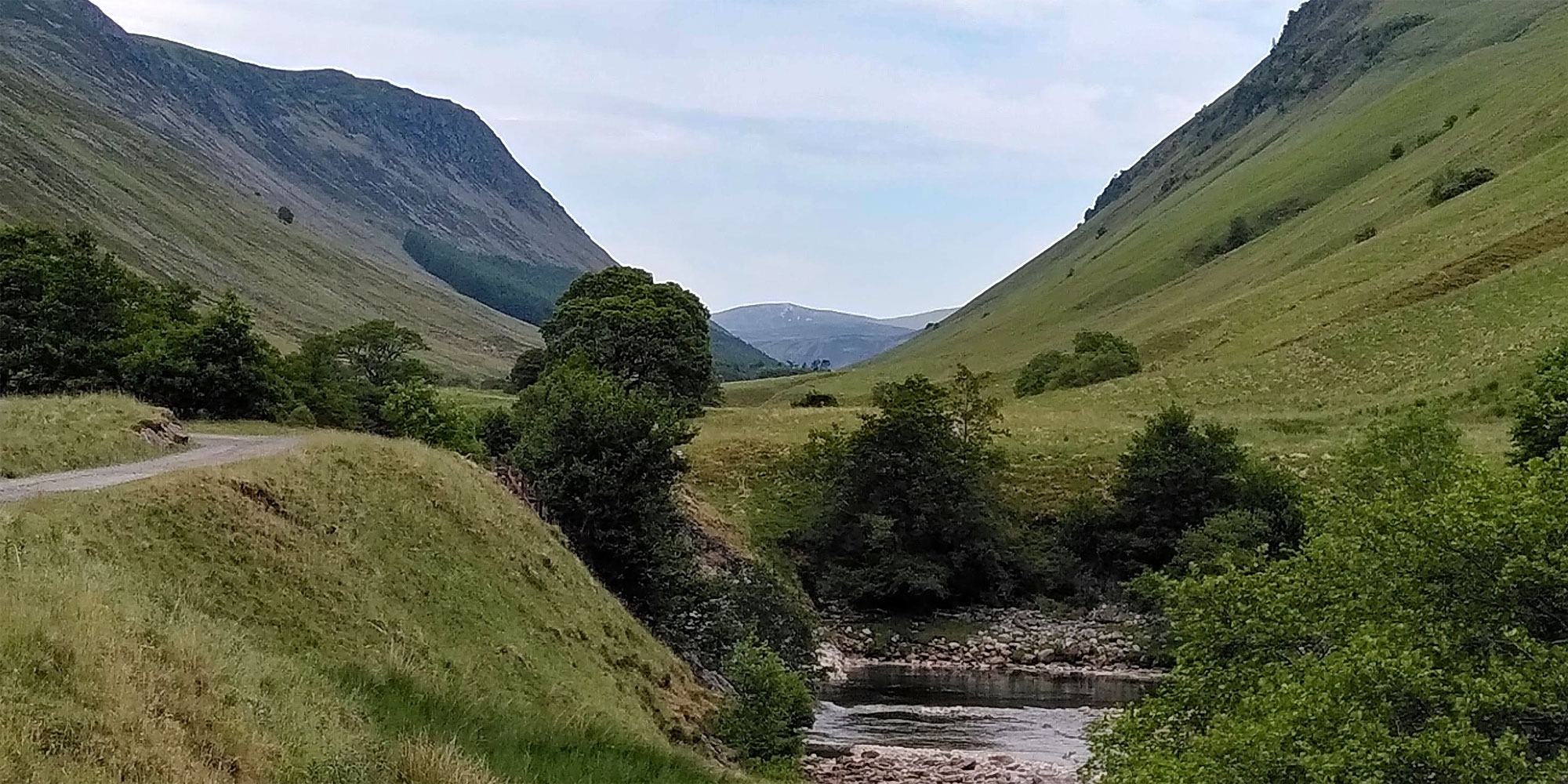
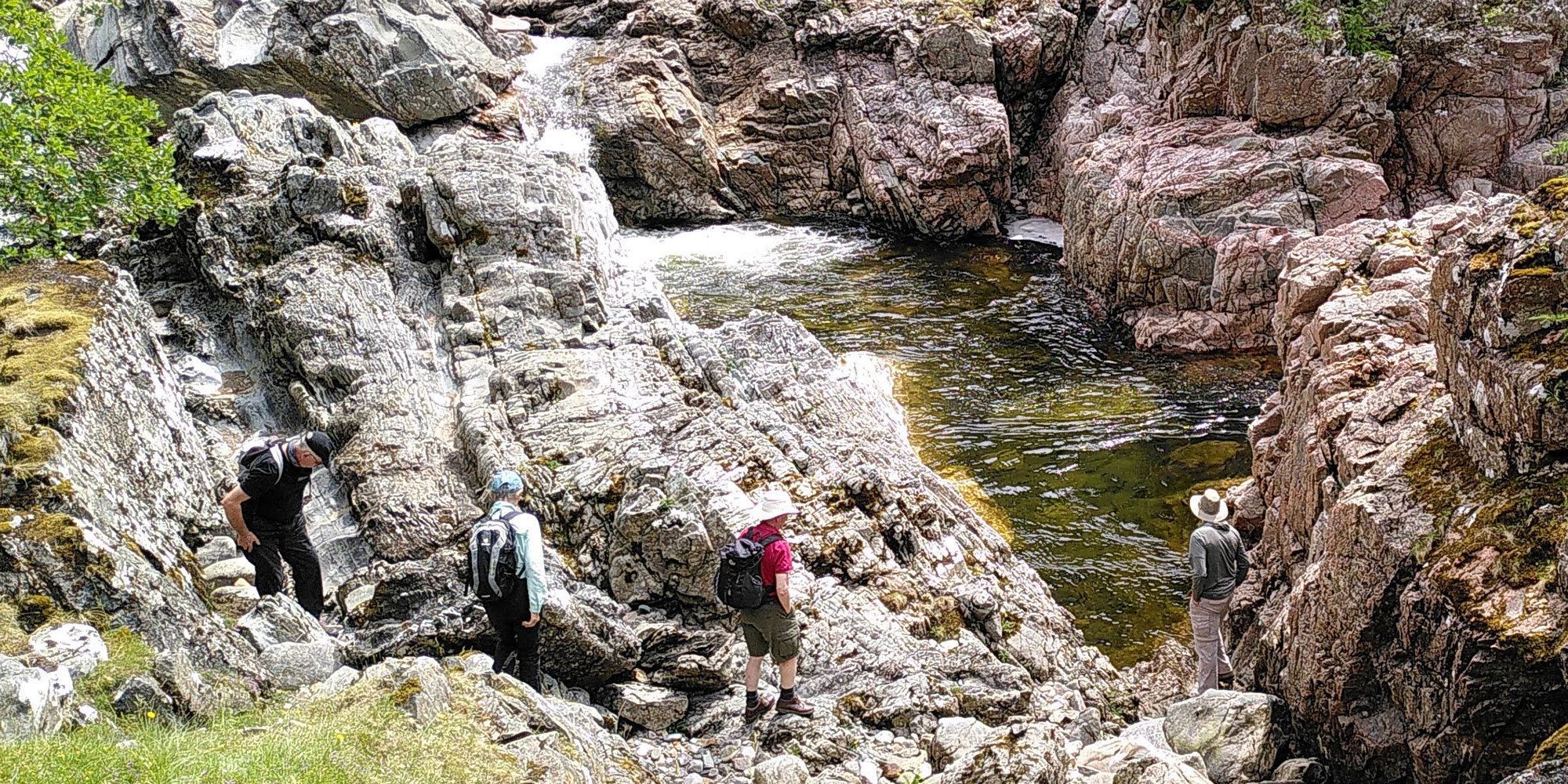

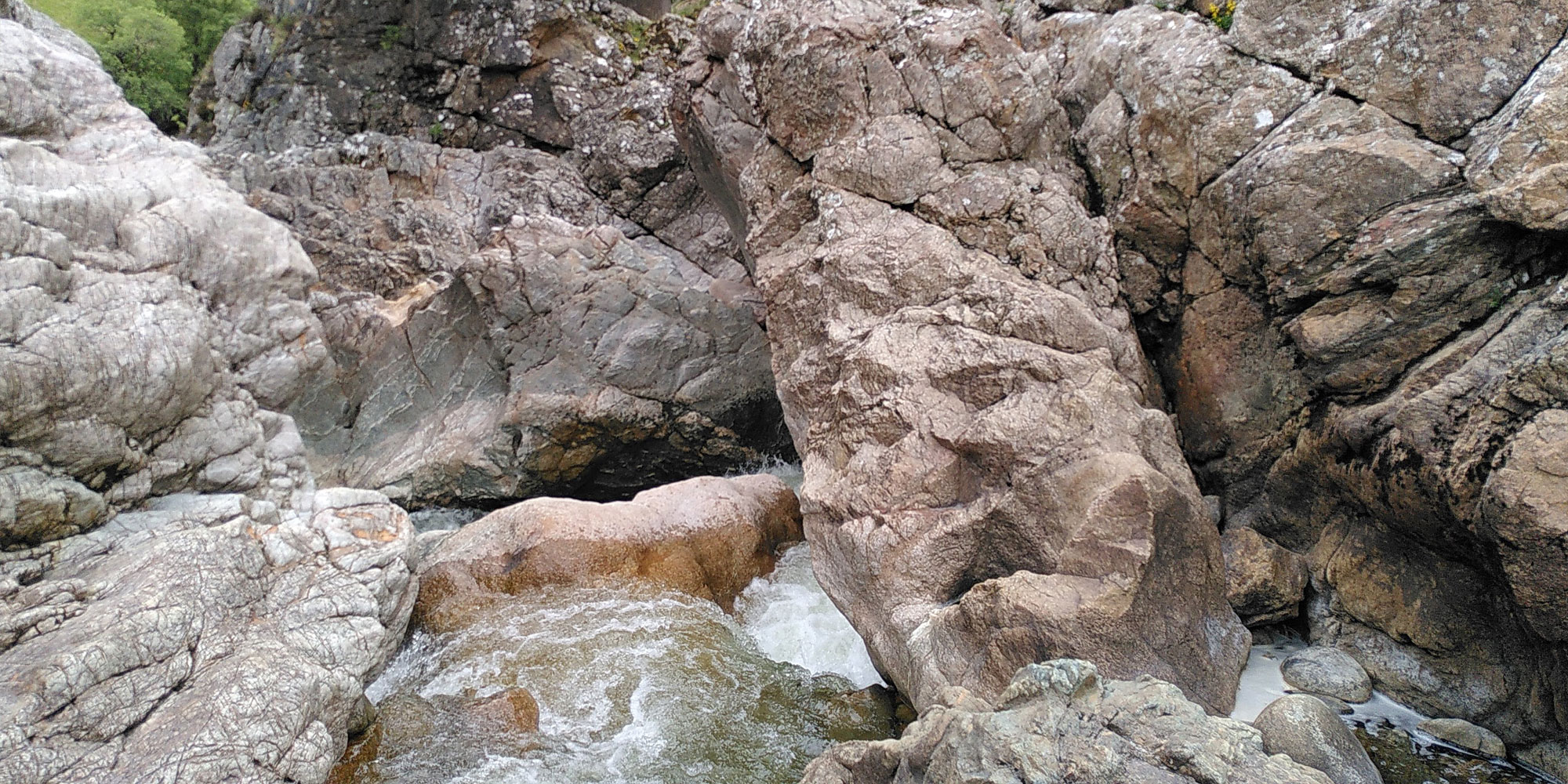
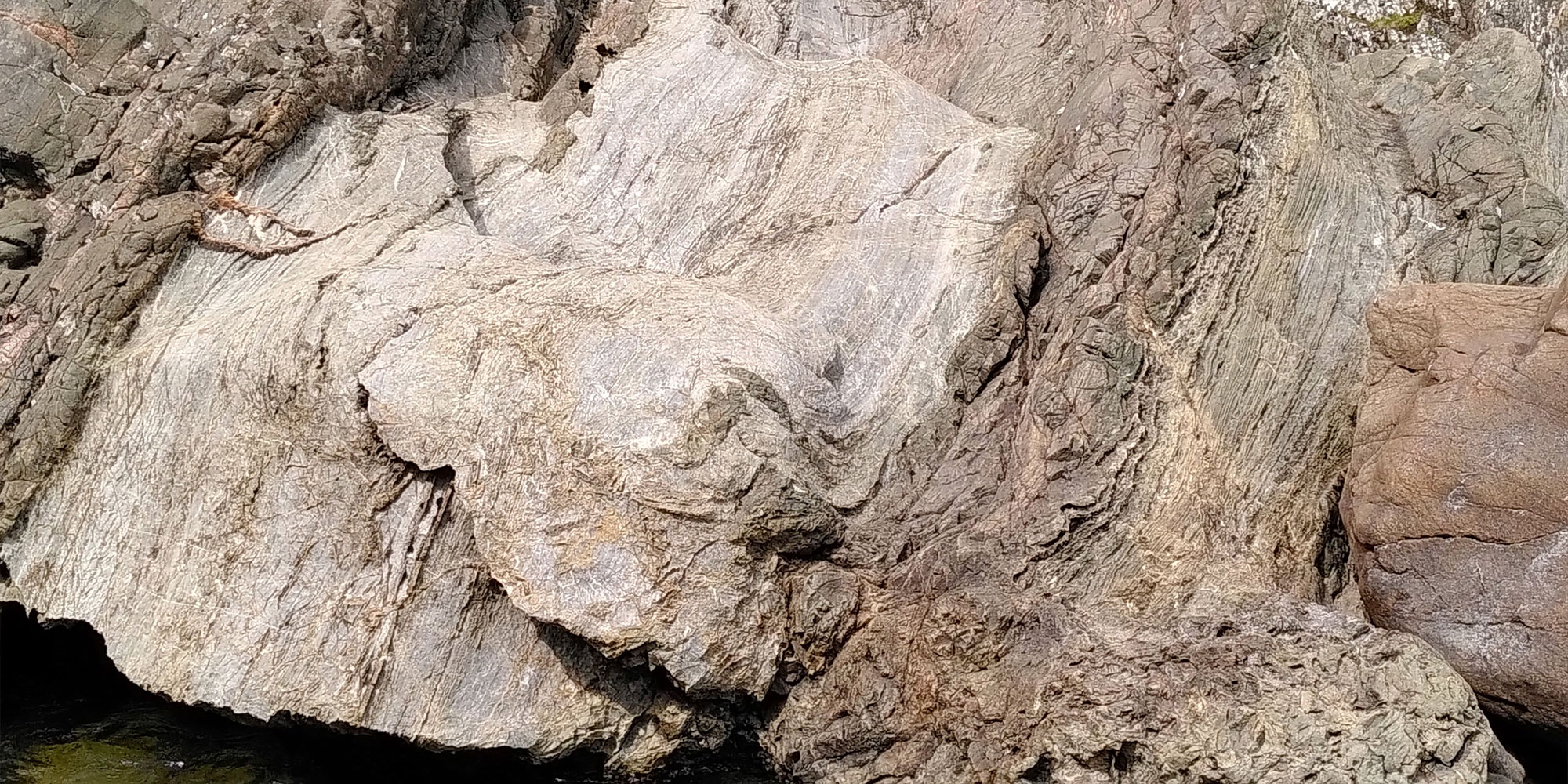
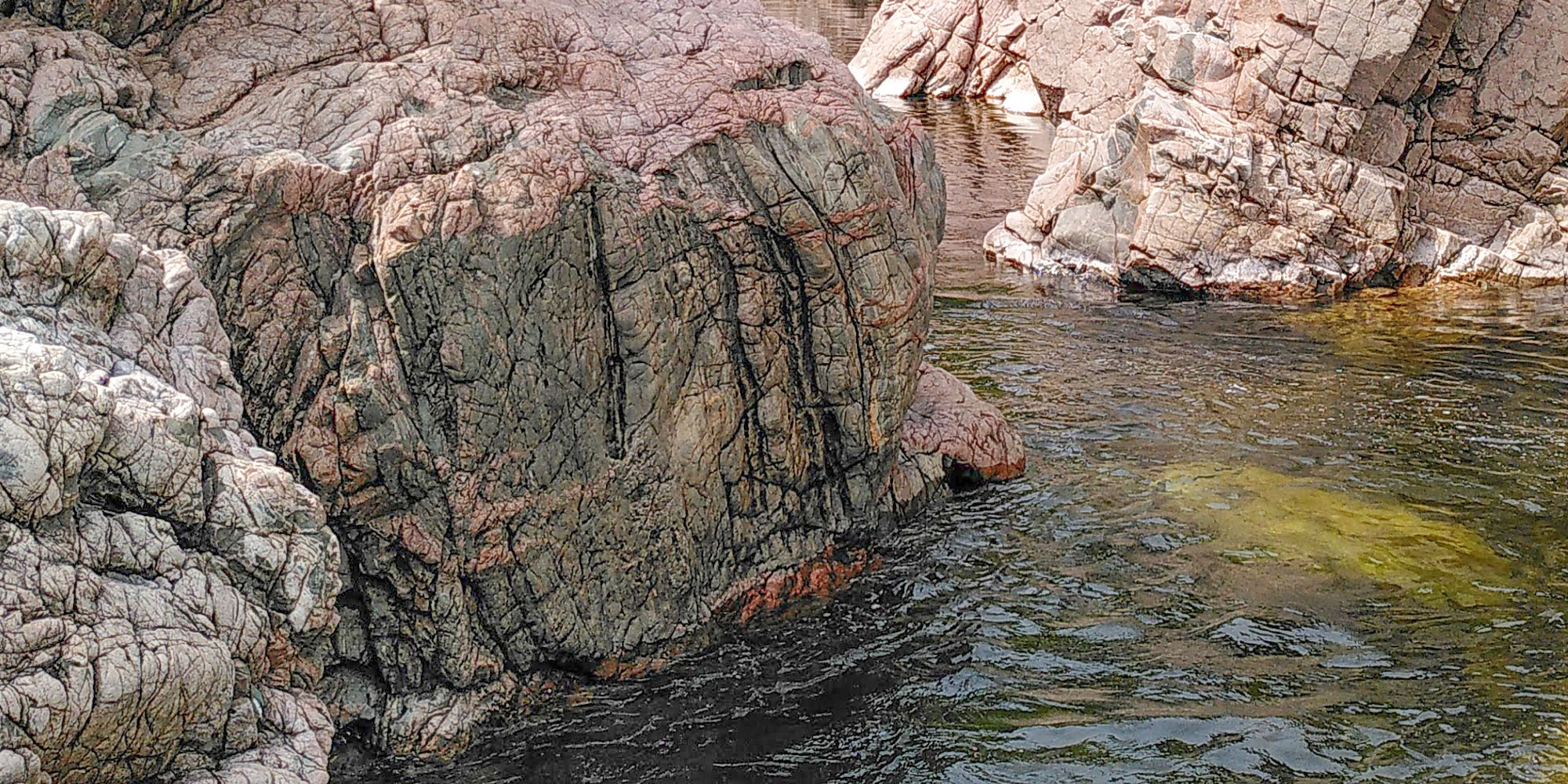
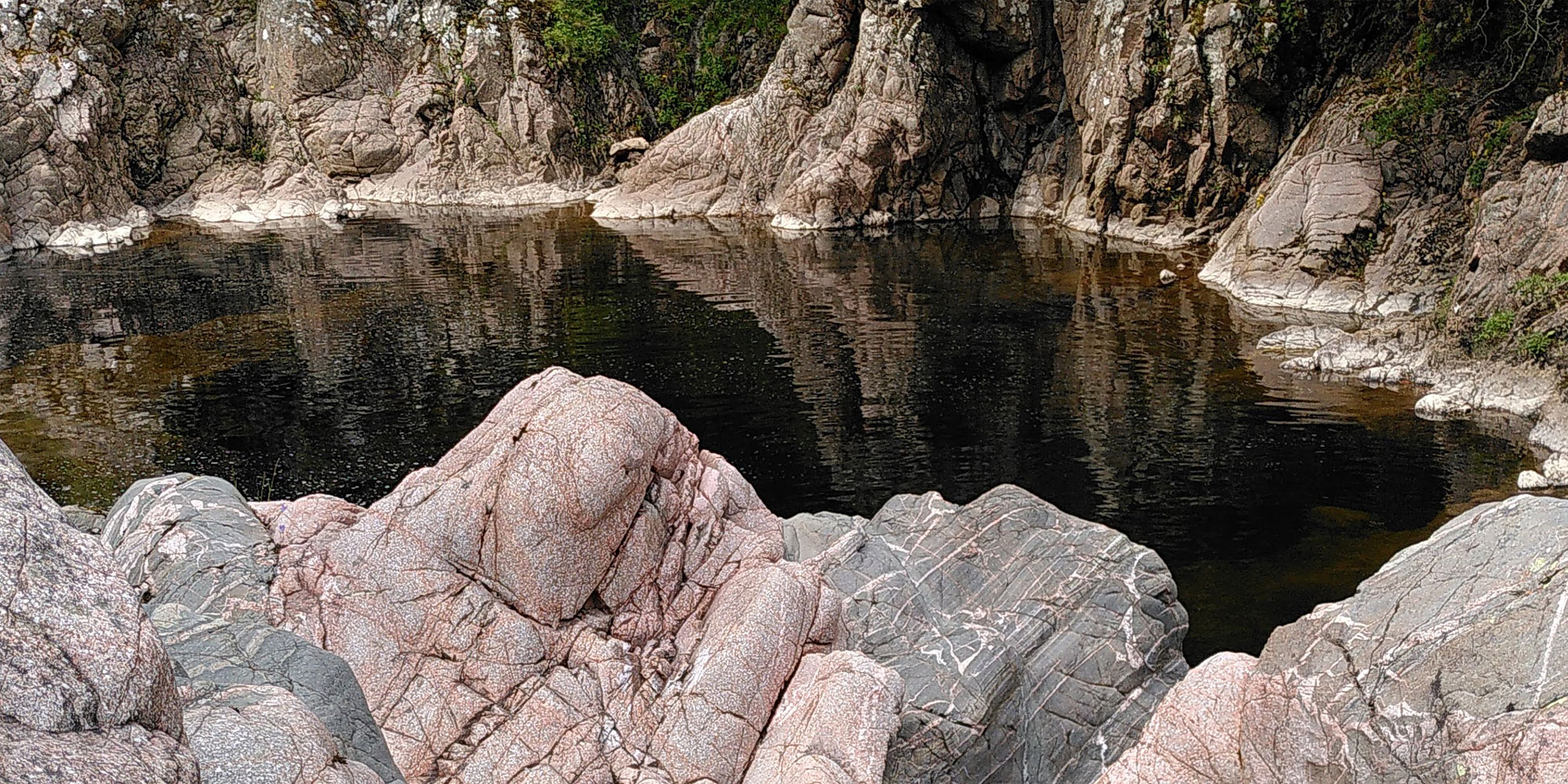
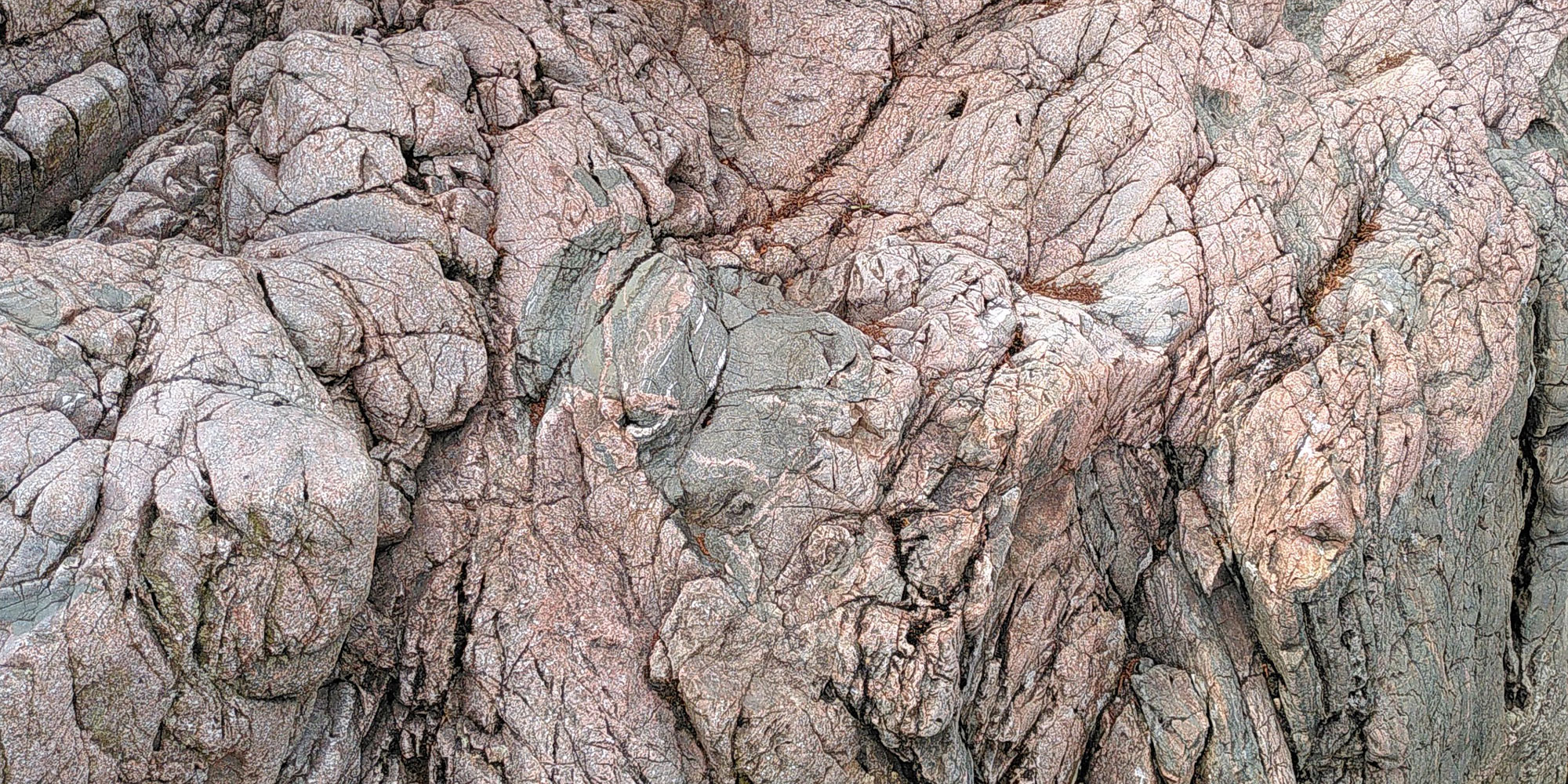
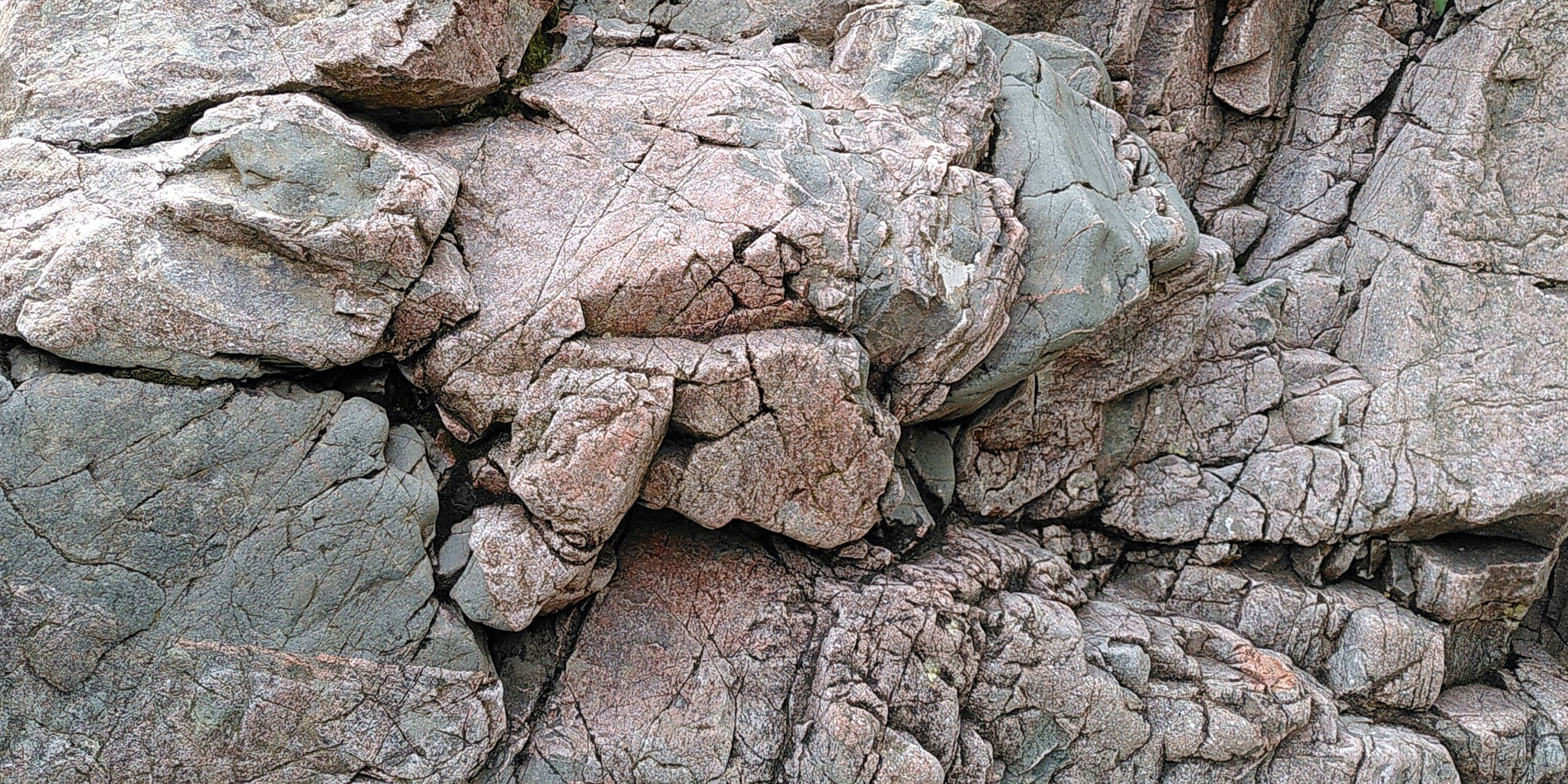
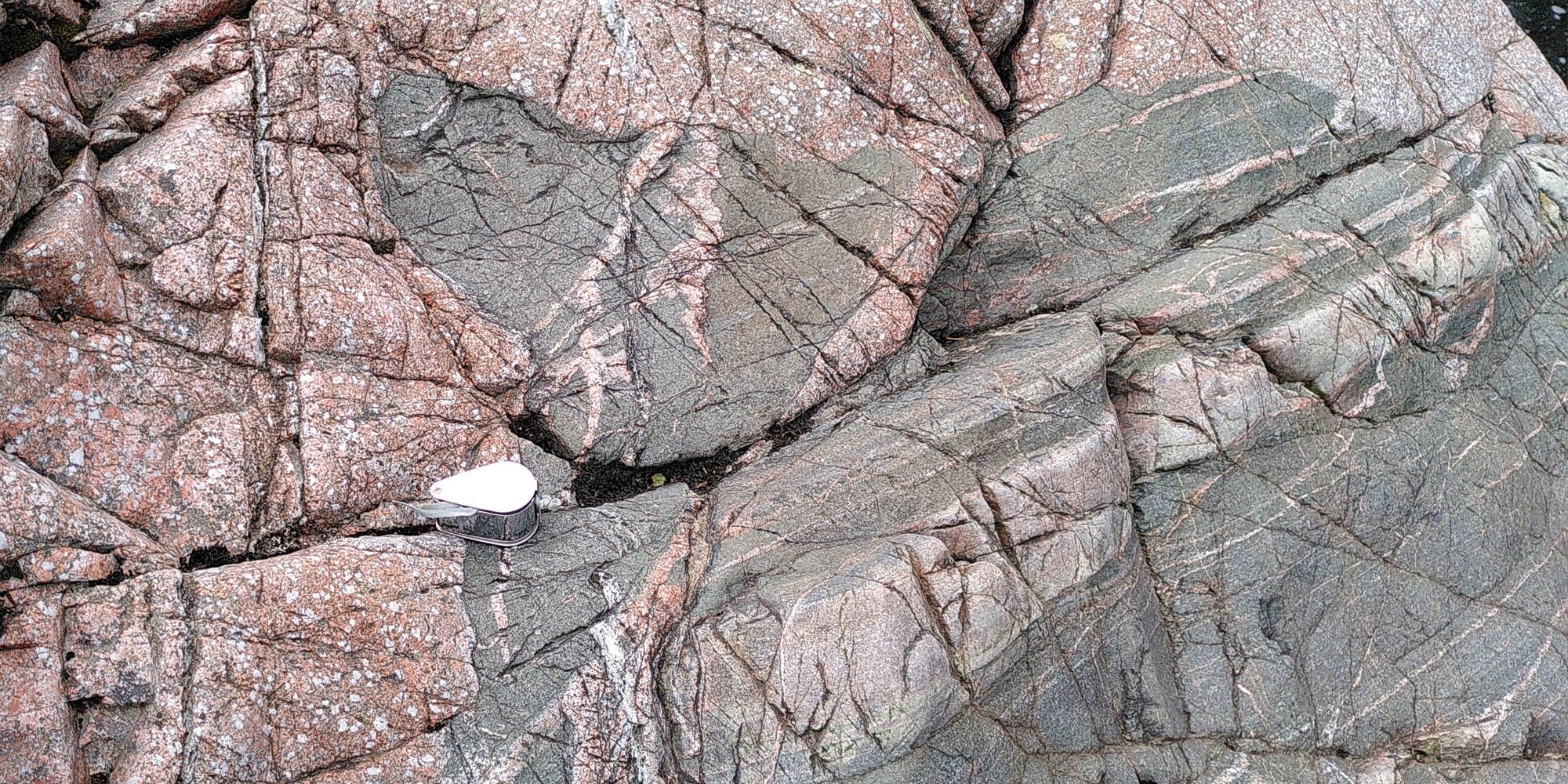
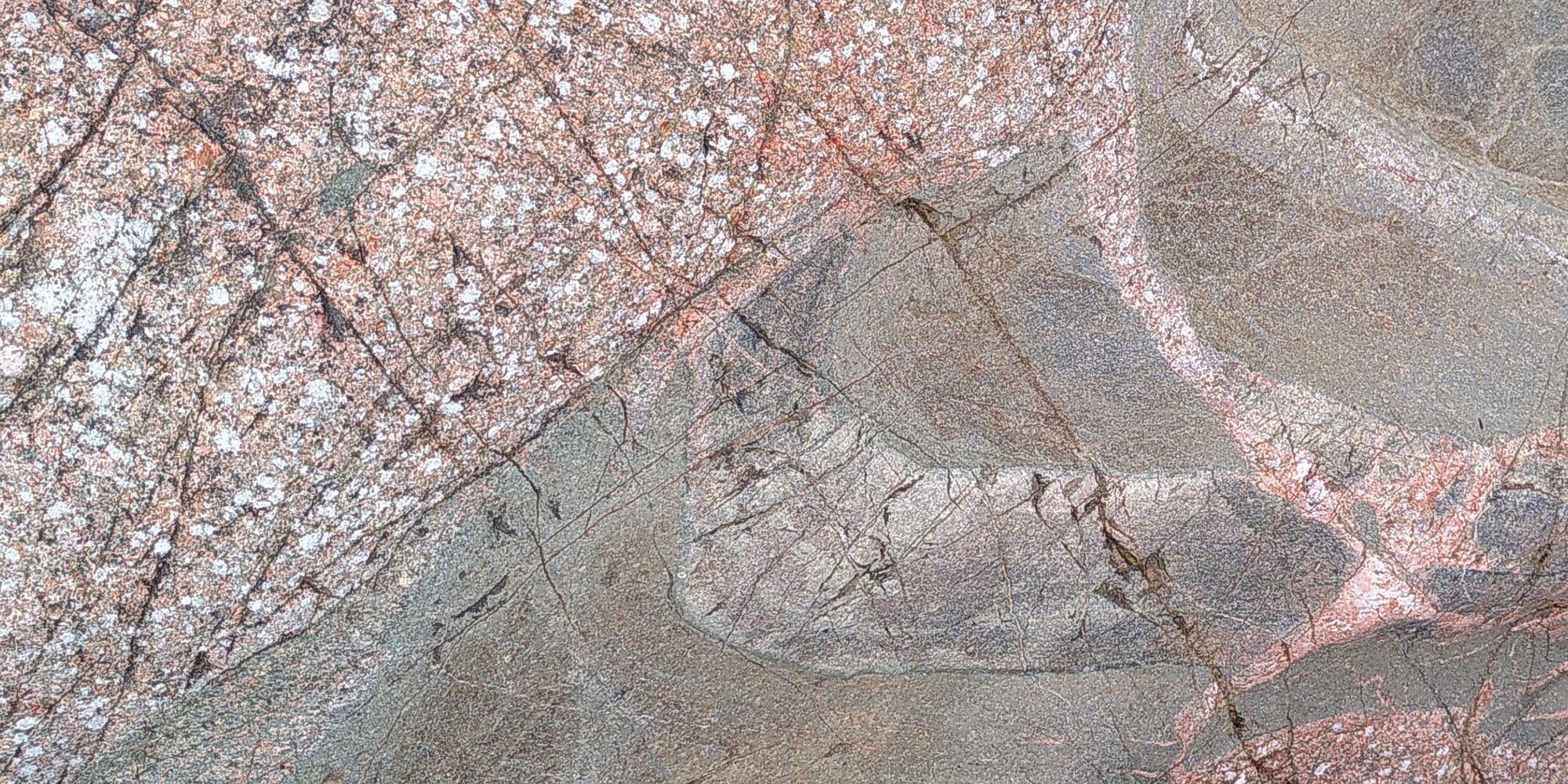
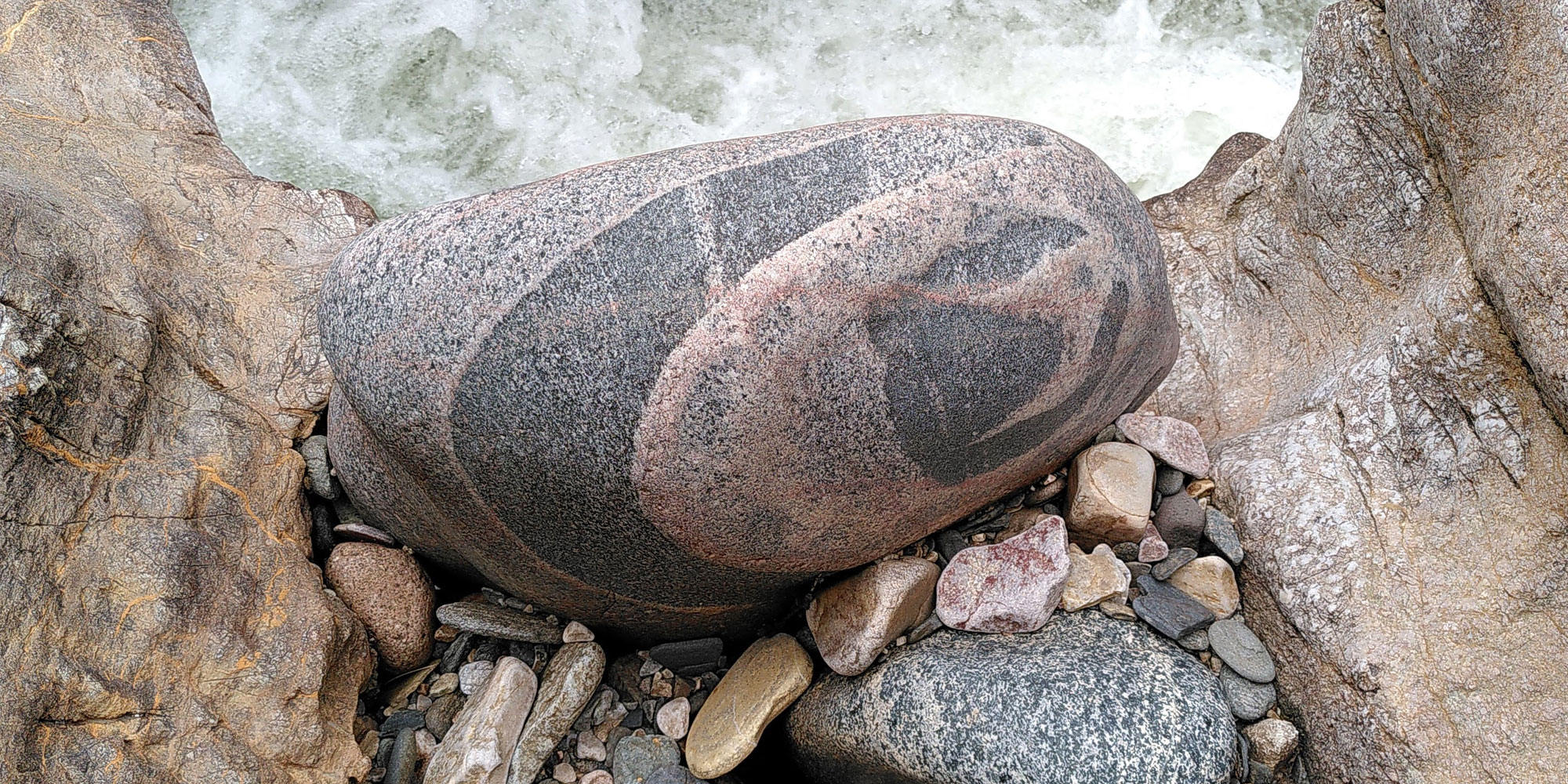
In 1785, accompanied by John Clerk of Eldin, James Hutton visited Glen Tilt in Perthshire, Scotland, and what he discovered here was evidence to support the theory of ‘Plutonism’. He believed that the numerous examples of granite exposures contained within the ancient surrounding rock had to have been younger and in a molten state for that to have happened. This fact conflicted with the proponents of ‘Neptunism’, who believed rock – including granite – formed by minerals crystallising in the ocean. Hutton proved this to be incorrect.
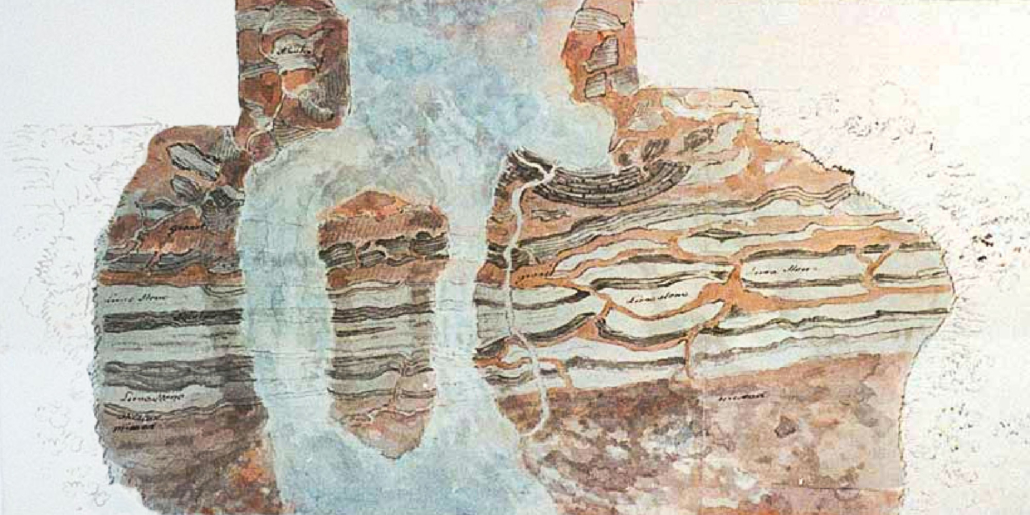
John Clerk’s 1785 sketch of the rocks he and James Hutton observed at Glen Tilt, Perthshire, Scotland.
Google Map of the location
How to get to Glen Tilt
- Generally, from wherever you are in Scotland, head towards the A9 road to Perthshire.
- Take the B8079, signposted Blair Atholl.
- Continue on the B8079 past Blair Atholl.
- Follow the signs to the Glen Tilt car park.
- From here, you will need to walk or cycle the rest of the way, as the road beyond is narrow with no parking, and later becomes private.
Geoguides on the Scottish Geology Trust Website