
Biography
Though he was a prolific writer, few of James Hutton’s documents survive. We have to rely mainly on the biography written by his friend Professor John Playfair.
Early Years
One of five children, James Hutton was born in Edinburgh on 3rd June 1726. His father William Hutton, who died when James was a small child, was a respected merchant and also Edinburgh City Treasurer. His mother Sarah Balfour ensured that James was well educated, first at the High School of Edinburgh and than at the age of 14 he went to the University of Edinburgh as a ‘student of humanity’.
Judging by his references to them in later life, he was most influenced in his studies there, by the mathematician Colin MacLaurin (a gaelic speaking student of Isaac Newton), and also Professor Stevenson “for having made him… a chemist”. This was to greatly influence his development as a geologist.
 “The instinct of genius…and by…the original constitution of his mind, a kind of elective attraction had drawn him towards chemistry”
At the age of 17, he was apprenticed to a lawyer; but this was not a successful move. According to his biographer John Playfair:
 “…happily the force of genius cannot always be controlled by the plans of a narrow and short-sighted prudence. The young man…was often found amusing himself and his fellow apprentices with chemical experiments instead of copying papers”
The next move in the course of Hutton’s eclectic education was into medicine at the age of 18, because (Playfair informs us), it was most closely allied to chemistry. He undertook this both as an assistant to an eminent Edinburgh physician whilst also attending lectures at the University. Three years later he continued his studies in Paris pursuing “…with great ardour the studies of chemistry and anatomy” and took the degree of doctor of medicine in 1749 at Leyden. His thesis was on blood circulation (“De Sanguine et Cirulatione in Microcosmo”).
Thoughts of Settling in the World
Following his time in Leyden, Hutton returned to London and thence back to Edinburgh in the summer of 1750. He was 24 years old. Prospects for establishing a medical practice were apparently few and probably did not hold great attraction for him without being able to indulge his fascination in chemistry.
One of those with whom he shared his chemical experiments as a youngster was a close friend, James Davie. They had together experimented on the nature and production of sal ammoniac from soot, which was to form the basis of a successful manufacturing business in which they were partners and from which they profited well.
Settled and Unsettled
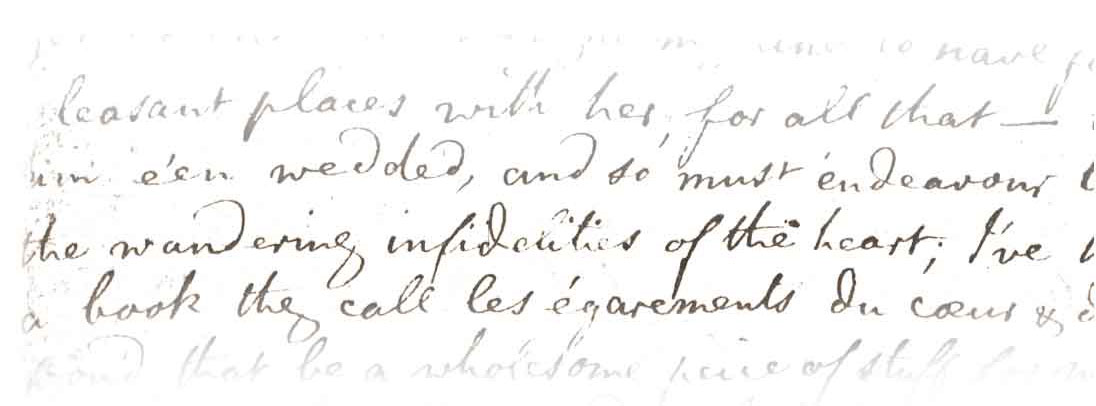
Though it is apparent that James Hutton never married, he did describe himself while farming in Berwickshire as:
“now I am e’en wedded, and so must endeavour to restrain the wandering infidelities of the heart”.
He had a son during his early twenties, born before 1750. It has been suggested that this ‘social misdemeanor’ (as it will have been considered at the time), was the reason for his decision to leave Edinburgh for a life of farming in Berwickshire.
His son, James Smeaton Hutton was a post-office clerk in London and had five children. It is apparent, that while his father gave him occasional financial assistance, he had very little to do with him. It is not known if indeed they ever met. After his death, James Hutton senior’s sister Isabella was generous to her brother’s grandchildren, as was Joseph Black, Hutton’s close friend.
Final Years
James Hutton’s business interests, in particular the Sal ammoniac factory he owned with James Davie, profited him well, so that he did not have to work for a living, leaving him the time to accrue evidence and to develop and expound on his theories.
“Indeed his manner of life, at least after he left off the occupations of husbandry (farming), gave him such a command of his time, as is enjoyed by very few. Though he used to rise late, he began immediately to study and generally continued busy till dinner. He dined early…and passed very little time at table for he ate sparingly and drank no wine. After dinner he resumed his studies or walked for two or three hours. The evening he always spent in the society of his friends”.
After several years of intermittent illness Hutton died on Saturday 26th March 1797 aged 70. His final day, as accounted by John Playfair:
“On (that day), he suffered a great deal of pain; but never-the-less, employed himself in writing, and particularly in noting down his remarks on some attempts which were then making towards a new mineralogical nomenclature. In the evening he was seized with a shivering, and his uneasiness continuing to increase, he sent for his friend Mr Russel who attended him as a surgeon. Before he could possibly arrive, all medical assistance was in vain: Dr Hutton had just the strength left to stretch out his hand to him and immediately expired”.
Playfair’s reference to the symptoms of Hutton’s illness including a painful retention of urine suggests speculatively that he suffered a prostate problem. In 1791 his friend Joseph Black performed a ‘dangerous and painful operation’ to relieve him of his ailment – without anaesthetic. He never fully recovered his health and was confined to his house in St John’s Hill for much of the last remaining years of his life.
James Hutton died intestate and his sister Isabella Hutton got his whole estate including the farms at Slighhouses and Nether Monynut and the house he built at St John’s Hill. On her death in 1818 she left Nether Monynut to the Smeaton-Huttons which were James Hutton’s grandchildren (by his son James Smeaton-Hutton), having already sold Slighhouses in 1810. The house on St John’s Hill was left to the Hutton’s great-nephew on their mother’s side, Andrew Balfour. It was later demolished, and the location is now the site of the James Hutton Memorial Garden.
The Person
Hutton had a wide circle of friends reflecting his wide interests, and it is apparent from John Playfair’s descriptions that he was popular; vivacious, quick-witted and slightly eccentric, coupled with acute powers of observation, reasoning and argument. He was also widely read and knowledgeable, with a singular independence of mind.

John Kay’s etching of James Hutton 1787
“He was upright, candid, and sincere: strongly attached to his friends; ready to sacrifice anything to assist them; humane and charitable”
“To his friends his conversation was inestimable; as great talents the most perfect candour, and the utmost simplicity of character and manners… This simplicity pervaded his whole conduct; while his manner, which was peculiar displayed a degree of vivacity, hardly ever to be found among men of profound and abstract speculation. His great liveliness, added to this aptness to lose sight of himself, would sometimes lead him into little eccentricities…”
“His conversation was extremely animated and forcible, and whether serious or gay, full of ingenious and original observation… Great information and an excellent memory, supplied an inexhaustible fund of illustration, always happily introduced… and in which the witty and ludicrous never failed to occupy a considerable place”.
“…a mind not fettered by prejudice nor swayed by authority”
“A mind of such singular activity and of such ardour in the pursuit of knowledge”
He was known for his bawdiness and his brevity “I ain’t like in haste to wax to fat nor fart nor fling neither”, of his description of life farming in Berwickshire, referring no doubt to the hard work he endured.
“The volcano was not created to scare superstitious minds and plunge them into fits of piety and devotion. They should be considered as the vent of a furnace” – this at a later stage in his life in defence of the formation of igneous rocks from hot liquid magma (from beneath the earth’s crust).
In Quakerish Raiment?
What did James Hutton look like? Robert Louis Stevenson describes him from Henry Raeburn’s portrait as: ‘Hutton the geologist in quakerish raiment, looking altogether trim and narrow, as if he cared more about fossils than young ladies’.

John Playfair’s opinion of Raeburn’s portrait is that it:
“conveys a good idea of a physiognomy and character to which it was difficult to do complete justice”
His description of Hutton further suggests that the portrait conveys a reasonable likeness:
“His figure was slender, but indicated activity; while thin in countenance, a high forehead and a nose somewhat aquiline… His eye was penetrating and keen, but full of gentleness and benignity; and… his dress, plain and all of one colour.”
We know from his letters that James Hutton was keen on women and also liked brandy toddy. John Playfair also says:
“It was always true of Dr Hutton, that to an ordinary man he appeared to be an ordinary man, possessing a little more spirit and liveliness, perhaps than is usual to meet with”.
Business and Related Interests
Although unambitious and showing no interest in wealth or power James Hutton acquired considerable wealth through his business interests.
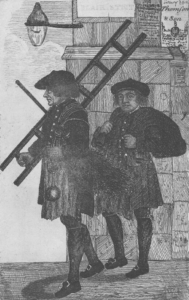
Tronmen in Edinburgh
He was partner in a successful and profitable sal ammoniac chemical works.
Hutton devised the manufacturing process with his business partner James Davie, involving soot collected on contract from Edinburgh’s chimney sweeps (known as tronmen).
This was a pioneer of industrial chemistry.
Sal ammoniac is ammonium chloride, a white soluble crystalline salt, used then for dyeing and working with brass and tin and as smelling salts.
Prior to this, all the sal ammoniac used in Britain was imported from Egypt.
It is now also used in the manufacture of dry cell batteries.
Hutton also owned and rented-out houses and shops in Edinburgh, employing a manager (or factor), to oversee them
Another of Hutton’s business ventures, was to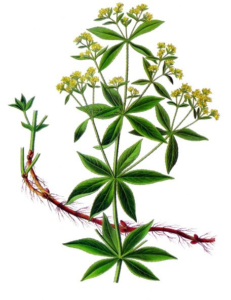 experiment on developing a red dye for Turkey red using the plant Rubia tinctoria (madder), which he grew either at Slighhouses or Edinburgh.
He sent all this work to a manufacturer in Glasgow with success.
One can only assume that he profited financially from this.
The Forth and Clyde Canal
“As Dr Hutton always took a warm interest in whatever concerned the advancement of the arts, particularly in his native country, he entered with great zeal into the project of an internal navigation between the Firths of Forth and Clyde.”
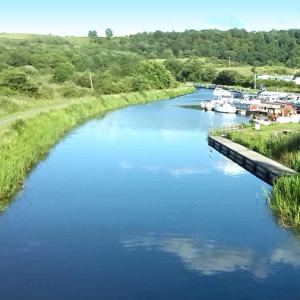 Following his period of farming in Berwickshire, Hutton became closely involved with the construction of the Forth and Clyde canal between the years 1767 -1774 during which he put his geological knowledge to commercial use. As a shareholder and member of the canal company’s committee of management he undertook a range of assigned tasks during a staggering total of 84 meetings in seven years – including site meetings which lasted two to three days along the canal route. These were arduous and involved inspections of all the works and depending on progress included locks, aqueducts, bridges and quarries.
The canal had a mixed history and in the spirit of all public works, even now in 21st century Scotland, its final cost greatly overshot original estimates with its eventual completion in 1790. By 1800 it was carrying 129,480 tons of cargo a year; mainly coal, herring, salt, timber, grain and iron with its zenith in 1866 with 2,925,453 tons.
His connection with the canal almost certainly prompted Hutton’s first publication on:
“Considerations on the Nature, Quality and Distinctions of Coal and Culm”.
Though published in 1777 it was probably drafted several years earlier. His likely motive was to increase traffic along the canal by persuading the Government to lower the tax on Scottish culm carried by sea. The pamphlet addressed the question:
“whether the small coal of Scotland is the same with the culm from England”
and if so, is it entitled to the exemption of duty tax when carried along the coast (and presumably along the canal)? Playfair informs us that:
“an exemption from duty was obtained for the small coal of Scotland… owing in great degree to… Dr Hutton’s pamphlet.”
Contemporaries
The Scottish Enlightenment was a period of intense intellectual productivity centred mostly on Edinburgh in the latter part of the eighteenth century (1760-1790). It is remarkable that the seeds of much western European thinking on economics, philosophy, sociology and science were sown in one location over this short period of time. Of the fifty or so individuals involved in this maelstrom of thought and experiment, the most illustrious and influential were Adam Smith, David Hume, Joseph Black and of course, James Hutton.
These were all highly learned and knowledgeable individuals, whose common aim was improvement of human knowledge and the human environment. While the Enlightenment has its roots in the seventeenth century and the beginnings of the development of a Scottish culture, it flowered unfettered by politics and religion; the centre of politics at the time was in Westminster (London), and the establishment of the Church of Scotland liberalised religious attitudes with the freer development of ideas.
The Oyster Club
The sociability and conviviality so characteristic of the period were important vehicles for the debate and sharing of knowledge, ideas, propositions, theories and inventions. There was a flourishing of clubs and societies where people gathered to share food, drink and ideas, such as the Oyster Club, founded by Hutton, Black and Smith. John Playfair describes how:
‘round them was soon formed a knot of those who knew how to value the familiar and social converse of these illustrious men’ and that Hutton used to ‘regularly unbend himself with a few friends in the little society… known by the name of the Oyster Club’.
Playfair in his biography of Hutton, goes on to describe how:
‘the conversation was always free, often scientific … and as this club was much the resort of the strangers who visited Edinburgh, from any object connected with art or with science, it derived from thence an extraordinary degree of variety and interest’.
In his ‘Scottish Reminiscences’ (1906), Sir Archibald Geikie recounts the formation of the Oyster Club. Hutton and Black, who were close friends, and ‘took a keen interest in their social meetings’ were tasked by colleagues to find a suitable venue for weekly meetings to discuss their developing ideas. They:
‘sallied out for this purpose, and seeing on the South Bridge a sign with the words Stewart, Vintner – Down stairs, … and …without further inquiry the meetings were fixed…until one evening, Dr Hutton being rather late was surprised to see a whole bevy of well-dressed but rather brazen-faced young ladies…take refuge in an adjoining apartment. He then for the first time began to think that all was not right… Next morning the notable discovery was made that our amiable philosophers had introduced their friends to one of the most disreputable houses in the city’.
The account does not reveal whether or not the Oyster Club changed venue.
Geikie also quotes from Kay’s Edinburgh Portraits of the time, a very amusing incident involving Hutton and Black, which if anything demonstrates the closeness of their friendship. A frequent topic of conversation between these two was apparently that of diet. On one occasion this included the absurdities of prejudice on what people ate; why not eat snails for example? They were known to be nutritious and wholesome. Having decided that their countrymen were absurd in not making snails an ordinary article of food, they procured a number to be stewed for dinner – no guests were invited.
‘But alas – great is the difference between theory and practice. So far from exciting the appetite the smoking dish acted in a diametrically opposite manner, and neither party felt much inclination to partake of its contents. Nevertheless, if they looked on the snails with disgust, they retained their awe for each other; so that each conceiving the symptoms of internal revolt to be peculiar to himself, began with infinite exertion, to swallow in very small quantities, the mess which he internally loathed. Dr Black at length broke the ice, but in a delicate manner, as if to sound the opinion of his messmate: “Doctor” he said in his precise and quiet manner,
“Doctor, do you not think that they taste a little – a very little queer? ”. “D—– queer! D—– queer, indeed! Tak’ them awa’, tak’ them awa” vociferated Dr Hutton, starting up from the table, and giving full vent to the feelings of his abhorrence’.
The Royal Society of Edinburgh
The Royal Society of Edinburgh (RSE) was founded during the golden years of the Scottish Enlightenment, receiving its Royal Charter 1783. It played an extremely important role in disseminating and encouraging papers on the ideas and theories emanating from the Enlightenment.
It had its beginnings in the Philosophical Society founded in c.1739 by Colin MacLaurin, and of which James Hutton became a member as soon as he returned to Edinburgh from farming in Berwickshire (1768). Hutton was a very active member of the RSE. With Black, Smith and Playfair he was among the members of its first Council and jointly with Black, was President of the Society’s Physical Class. He was also on the publications sub-committee. He frequently chaired meetings and was often the speaker on an extraordinarily wide range of subjects including geology, medicine, agriculture, chemistry, meteorology, philosophy, and the Chinese language.
Friends, Mentors and Others
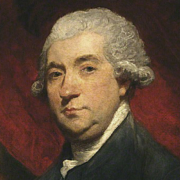
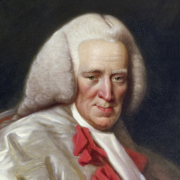
James Hutton had many personal acquaintances who were prominent in the Scottish Enlightenment.
(Click on any image or name for more information.)

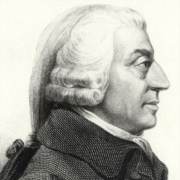


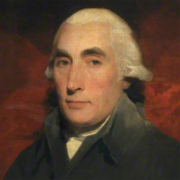

James Davie

He also enjoyed close links with others, including:
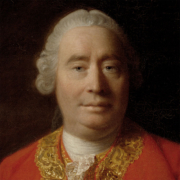
The Natural Philosopher
James Hutton had wide interests in other areas of natural philosophy (science), other than geology. He believed that science is most important as the basis for a sound philosophy of life ‘the art of human happiness – an art which is only to be attained by education and brought to perfection by philosophy’. He published books on physics, chemistry and philosophy between 1792 – 1794. ‘The Dissertations on Different Subjects in Natural Philosophy’ covered meterology (in which he had a long interest), his defence of the phlogiston theory and his theory on matter; which he used to explain gravity, volume, hardness and fluidity, heat, light and electricity.
His health was failing during this period and he fell seriously ill in 1793. He recovered and published in 1794 ‘A Dissertation upon the Philosophy of Heat, Light and Fire’ followed by ‘An Investigation of the Principles of Knowledge and the progress of Reason, from Sense to Science and Philosophy’. In it he considers causation, space, time, the origin of society, morality, politics and education His ‘Elements of Agriculture’ was possibly written over a 40 year period and unfinished when he died in 1797. He may not have meant for it to be published.
His theory on time is of particular interest in relation to his intellectual capacity to expound the enormity of time necessary for his suppositions in his Theory of the Earth. He held that there was no such thing as time, it is merely a convenient way of describing the duration of events; it continues for as long as it takes for an event or events to exit.
It is argued that these dissertations on natural philosophy, in particular his Investigation into the Principles of Knowledge (which runs to more than 3,000 pages), were part of an ambitious intellectual project to establish the grounds of rational human knowledge, influenced by his belief in deism.